
What to Expect During a Professional AC Tune Up
Spring in Utah County brings warmer afternoons, and your air conditioner is about to work overtime. A professional AC tune up prepares your cooling system for the heat ahead, catching small issues before they turn into breakdowns on the hottest day of the year. Most homeowners in Orem, Provo, and Lehi schedule tune ups between March and May, giving technicians time to service the system before peak demand hits. During a tune up, a licensed technician inspects, cleans, tests, and calibrates the components that keep your home comfortable. The goal is simple: restore efficiency, extend equipment life, and confirm safe operation. Knowing what happens during each step helps you understand the value of the visit.
What Happens During a Professional AC Tune Up Inspection
A professional AC tune up starts with a full visual inspection of the outdoor condenser, indoor evaporator coil, and air handler. Technicians look for corrosion, refrigerant oil stains, damaged electrical connections, and signs of pest intrusion. They also check the condensate drain line, refrigerant lines, and insulation around the copper suction line. Each of these parts plays a role in how efficiently your system cools your home. A thorough inspection sets the baseline for every other step in the tune up. Skipping this stage often leads to missed issues that resurface mid-summer.
A Thorough AC Tune Up Inspection of the Outdoor Unit
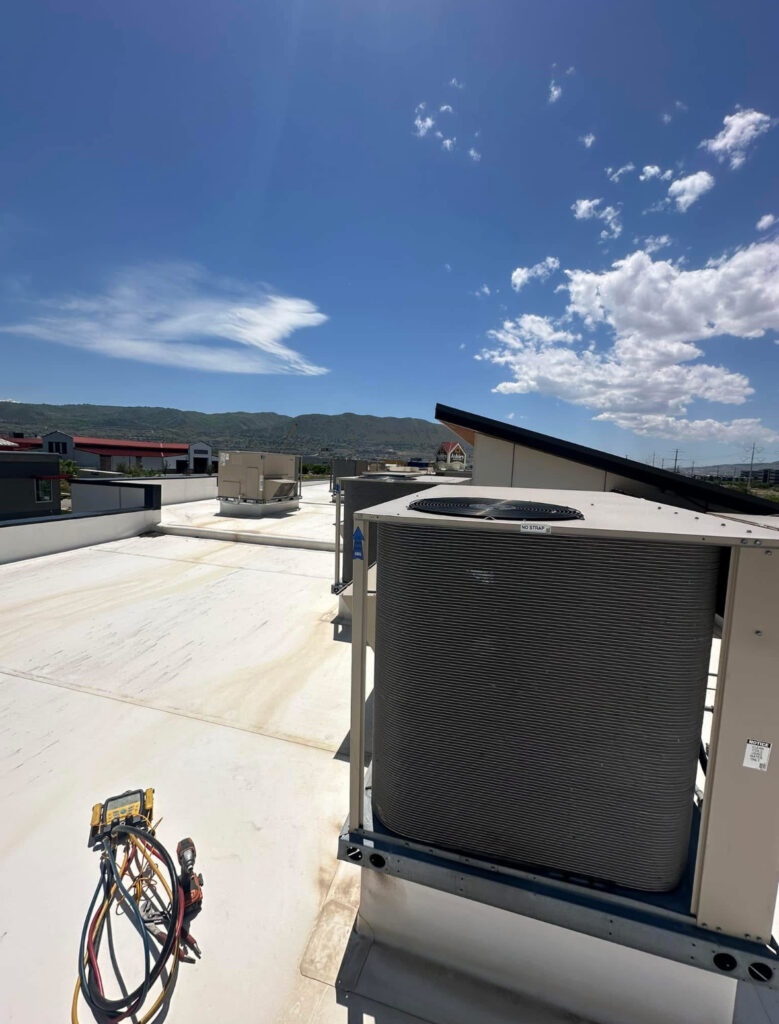
The outdoor condenser handles the heaviest workload during a Utah summer, so a thorough AC tune up inspection begins there. Technicians remove the top grille and inspect the condenser coil for dirt, cottonwood fuzz, grass clippings, and mineral buildup from sprinkler overspray. A dirty coil forces the compressor to run longer and hotter, which shortens its service life and raises your power bill. The fan motor is checked for bearing wear, blade balance, and proper amperage draw. Technicians also inspect the contactor for pitting and the capacitor for bulging or reduced microfarad readings. Loose wiring, rodent damage, and corroded service disconnects are flagged during this stage.
Next, the technician checks the pad the condenser sits on. Settling, cracking, or tilting of the pad can stress the refrigerant lines and cause vibration damage over time. They also clear leaves, mulch, and weeds from the two feet of space the unit needs for proper airflow. Shrubs planted too close to the condenser reduce heat rejection and push head pressures higher than the compressor was designed to handle. A quick trim now prevents a costly repair in July. Technicians document any concerns with photos so you can see exactly what they found.
Finally, the outdoor unit gets a gentle coil wash using a fin-safe cleaner and low-pressure water. High-pressure nozzles bend the aluminum fins, which is why professionals use specialty tools instead of a garden hose set to jet. After cleaning, airflow through the coil improves dramatically, and refrigerant temperatures drop back into the manufacturer’s target range. The technician then reinstalls the top grille and verifies that the fan pulls air straight up without obstruction. This part of the tune up alone can recover a measurable percentage of lost cooling capacity. Need a full system checkup before summer? Click here for our air conditioning maintenance service.

The Indoor AC Tune Up Inspection Checklist
Inside the home, the AC tune up inspection checklist shifts to the air handler, evaporator coil, and blower assembly. Technicians pull the access panel to examine the evaporator coil for dust buildup, biological growth, and frost patterns. A coil coated in dust cannot absorb heat efficiently, which is why your system may run all day without cooling the house. They also inspect the condensate drain pan for standing water, rust, and algae that can clog the drain line. A clogged drain line is one of the top causes of summer AC shutdowns in Utah homes. Float switches and safety sensors are tested to confirm they will trip before water damages the ceiling below.
The blower wheel is inspected next, since a dirty wheel moves significantly less air than a clean one. Dust accumulation on the blades changes the aerodynamic profile and reduces CFM through the ductwork. Technicians measure static pressure across the system to confirm the blower is moving air within manufacturer specifications. High static pressure points to dirty filters, closed registers, undersized return ducts, or a failing blower motor. Low airflow also causes the evaporator coil to freeze, which damages the compressor over time. Correcting airflow issues during a tune up protects the most expensive parts of your system.
The air filter is checked, and the technician will replace it or recommend a specific MERV rating based on your home. Filters that are too restrictive starve the system for air, while filters that are too loose allow dust onto the coil. Ductwork near the air handler is inspected for disconnected joints, crushed flex duct, and missing insulation. Any of these issues waste cooled air inside walls, attics, and crawl spaces. Technicians also confirm the return plenum is sealed properly so the system is not pulling unconditioned attic air. Each finding is explained in plain language before any work is performed.
Electrical and Safety AC Tune Up Inspection Steps
Electrical and safety AC tune up inspection steps protect both the equipment and your home. Technicians open the disconnect box and the control panel to check every wire termination for tightness, discoloration, and heat damage. Loose connections create resistance, which generates heat and eventually melts insulation or trips breakers. The capacitor is tested with a meter to confirm it holds the rated microfarads; a weak capacitor is the single most common cause of compressor failure on a hot afternoon. Contactors are inspected for burned points that prevent proper voltage from reaching the compressor. Control boards and relays are tested for correct sequencing during startup and shutdown.
Voltage and amperage are measured at the compressor and the fan motor during operation. Readings outside of manufacturer specifications point to motor wear, refrigerant issues, or electrical supply problems. Technicians also check the thermostat wiring for correct polarity and verify that low-voltage transformers produce the proper 24 volts. A failing transformer can cause intermittent cooling issues that seem random and frustrating. All electrical readings are logged so changes can be tracked year over year. This trend data helps predict failures before they leave you without cooling.
Safety controls receive their own round of testing during the tune up. The high-pressure switch, low-pressure switch, and float switch are each verified for proper operation. These controls shut down the system if something goes wrong, preventing compressor burnout or water damage. Technicians also inspect the surge protection, if installed, and recommend one if your system lacks it. Utah summer storms produce voltage spikes that can destroy circuit boards in a single event. A surge protector is inexpensive compared to a replacement control board or compressor.
How a Professional AC Tune Up Improves Performance and Efficiency
A professional AC tune up improves performance and efficiency by restoring the system to factory specifications. Over a year of operation, dust builds up on coils, refrigerant charge can drift, and moving parts lose lubrication. Each of these changes forces the system to work harder for the same amount of cooling. An AC tune up reverses that wear and brings your efficiency back toward the original SEER rating. Homeowners often notice quieter operation, colder vents, and lower power bills within the first billing cycle. Commercial property owners see similar gains across rooftop units and split systems.
An AC Tune Up Improves Cooling Performance in Every Room
An AC tune up improves cooling performance in every room by addressing the issues that cause uneven temperatures. Hot bedrooms upstairs and cold basements are usually symptoms of airflow problems, not undersized equipment. Technicians measure supply and return airflow at each register to identify imbalances. They also check damper positions, duct sizing, and return air pathways. Small adjustments during a tune up often eliminate comfort complaints that have lingered for years. Balanced airflow also reduces humidity in the areas that previously stayed warm and muggy.
Refrigerant charge plays a direct role in cooling performance room by room. An undercharged system cannot absorb enough heat at the evaporator, which leaves vents blowing lukewarm air. An overcharged system floods the compressor with liquid refrigerant and damages internal valves. Technicians verify charge using superheat and subcooling measurements, not just pressure gauges. These calculations account for outdoor temperature, indoor humidity, and equipment type. Correct charge is one of the most impactful adjustments made during any tune up.
The thermostat is calibrated to confirm it reads actual room temperature accurately. A thermostat that reads two degrees off can cause the system to short cycle or run too long. Technicians check the location of the thermostat and flag installations near kitchens, direct sunlight, or supply registers. A poorly located thermostat sends bad data to the system and causes comfort issues no amount of tuning can fix. Smart thermostats are tested for correct wiring, including the C-wire that powers the display. Want to upgrade to a smart thermostat this spring? Click here for our thermostat installation service.
An AC Tune Up Improves Energy Efficiency and Lowers Bills
An AC tune up improves energy efficiency and lowers bills through a series of small corrections that add up fast. A condenser coil with visible dirt can reduce efficiency by a significant margin, depending on severity. Cleaning the coil restores heat rejection and drops compressor run time measurably. Tight electrical connections reduce resistance, which in turn reduces wasted wattage. Proper refrigerant charge keeps the compressor operating in its most efficient range. Each of these steps is standard during a tune up, and together they produce real savings.
Blower motors and fan motors also benefit from tune up adjustments. Belt-driven blowers are checked for belt tension and pulley alignment, both of which affect amp draw. Direct-drive motors are cleaned and tested for bearing wear that would otherwise cause them to pull more current. Variable-speed motors are verified against their ECM programming to confirm they are ramping correctly. A motor running outside of its designed range wastes energy every minute the system operates. Catching these issues early prevents both higher bills and premature motor failure.
Duct leakage is another hidden efficiency loss that a tune up can address. Technicians inspect visible ductwork for gaps at joints, torn flex connections, and missing mastic at register boots. Sealing these leaks keeps cooled air inside the conditioned space rather than venting into attics or crawl spaces. Even a modest reduction in duct leakage produces noticeable savings over a full cooling season. Insulation around ducts in unconditioned spaces is also checked, since uninsulated ducts absorb heat before the air reaches your rooms. Small repairs during a tune up often pay for the service within one summer.

An AC Tune Up Improves System Lifespan and Reliability
An AC tune up improves system lifespan and reliability by reducing the stress that causes premature failure. Most AC components fail because of heat, vibration, or electrical stress, and all three are reduced when the system is properly maintained. A clean condenser runs cooler, which extends compressor life significantly. Tight electrical connections prevent the arcing that destroys contactors and control boards. Correct refrigerant charge keeps the compressor motor from overheating during long run cycles. These protections are the reason maintained systems often last years longer than neglected ones.
Moving parts receive attention during the tune up as well. Bearings are inspected for noise and play, and motors are checked for unusual vibration. Fan blades are cleaned and balanced if needed, since an out-of-balance blade damages bearings over time. Any component showing early signs of wear is flagged so you can plan replacement before it fails. Planned replacement costs far less than emergency service on a 95-degree afternoon. It also lets you schedule the work at a convenient time.
Documentation is the final piece of reliability. Every reading, adjustment, and recommendation from the tune up is recorded in your service history. This record helps technicians spot slow trends, such as a capacitor that drops one microfarad each year or a compressor that pulls slightly more amps each season. Early intervention based on this trend data prevents the sudden failures that force emergency repairs. Your service history also supports warranty claims, since most manufacturers require proof of annual maintenance. A well-documented tune up protects both your equipment and your investment.
Why You Need a Professional AC Tune Up From Vortex Air HVAC This Spring
Scheduling a professional AC tune up from Vortex Air HVAC this spring protects your home, your budget, and your peace of mind. Utah summers push equipment hard, and a system that starts the season strong is far less likely to fail mid-July. Our licensed technicians follow a complete tune up process on every visit, no shortcuts and no skipped steps. We serve Orem, Provo, Lehi, American Fork, and the surrounding communities with same-week scheduling during peak season. Booking early also gives you priority access before the summer rush. A single tune up visit sets the tone for the entire cooling season.
A Professional AC Tune Up Prevents Summer Breakdowns
A professional AC tune up prevents summer breakdowns by finding weak components before they fail under load. Capacitors, contactors, and motors rarely die on mild days; they fail when the system is running at full capacity. Identifying a weak capacitor in April is a twenty-minute fix, while the same part failing in July often means a same-day emergency call. Tune ups move these repairs from the emergency column into the planned maintenance column. That shift alone saves money and stress every summer. It also keeps your family comfortable on the days when cooling matters most.
Refrigerant issues are another common cause of summer breakdowns. A small leak that goes unnoticed over winter can empty the system by the first heatwave, and running a low system damages the compressor quickly. During a tune up, technicians check for leaks using electronic detectors and UV dye when needed. Catching a leak early lets you repair it before the compressor suffers damage. Repairing a leak costs a fraction of replacing a compressor. It also keeps refrigerant out of the environment.
Airflow problems, clogged drains, and dirty coils also show up as summer breakdowns. Each of these conditions is addressed during a standard tune up visit. Technicians clear drains, clean coils, and correct airflow before the heat arrives. This proactive approach is why homes with annual maintenance rarely experience mid-summer outages. Commercial customers see the same benefit across rooftop units, walk-in coolers, and refrigeration equipment. Want to schedule commercial maintenance as well? Click here for our commercial HVAC service.
A Professional AC Tune Up Protects Your Manufacturer Warranty
A professional AC tune up protects your manufacturer warranty by meeting the annual maintenance requirements most manufacturers include in their terms. Warranty denials often trace back to missing service records, not the actual cause of failure. When a compressor fails at year seven and the manufacturer asks for maintenance history, a documented tune up record is what keeps the claim valid. Homeowners who skip maintenance frequently find themselves paying out of pocket for repairs that should have been covered. Protecting your warranty is one of the simplest reasons to schedule annual service. The cost of a tune up is far less than the cost of an uncovered compressor replacement.
Our tune up documentation includes every measurement, part inspected, and adjustment made during the visit. This level of detail satisfies even the strictest warranty requirements. We keep copies of your service records on file, so you have them when you need them. Manufacturers also appreciate seeing consistent service from a licensed HVAC contractor. Sporadic service or DIY attempts often raise red flags during warranty reviews. Professional documentation removes that risk entirely.
New systems installed within the last ten years almost always include warranty terms that require annual maintenance. Many homeowners do not realize this until a major failure occurs. Checking your warranty documents is worth the few minutes it takes. If annual service is required, a tune up from a licensed HVAC company is the easiest way to stay compliant. We handle the paperwork and the service in one visit. You get peace of mind and a valid warranty at the same time.
Why Choose Vortex Air HVAC for Your Professional AC Tune Up
Choose Vortex Air HVAC for your professional AC tune up because we combine technical skill with straightforward service. Our technicians are licensed, certified, and trained on every major brand of residential and commercial equipment. We show up on time, explain what we find, and give you pricing before any work begins. No surprise fees, no upsells on parts you do not need, and no rushed inspections. Every tune up follows the same complete checklist, whether the system is one year old or fifteen.
We are locally owned and operated, based at 776 W 165 S in Orem, and we serve families and businesses across Utah County. Our roots in this community shape how we treat every customer. Reviews from homeowners in Provo, Lehi, Pleasant Grove, and beyond reflect the care we put into each visit. We offer 24/7 emergency service for the rare occasions when something goes wrong between tune ups. Same-day and next-day appointments are usually available during spring.
Call Vortex Air HVAC at (801) 400-2422 to schedule your professional AC tune up before the summer heat arrives. Email us at info@vortexairhvac.com with questions about your system or our maintenance plans. We also offer tune ups for furnaces, heat pumps, mini splits, and commercial refrigeration equipment. One call can handle the cooling, heating, and refrigeration needs of your home or business. Book now and start the season with a system that is ready for anything.