
How to Keep Walk In Freezers Running in Extreme Heat
Walk in freezers face their toughest test during the peak of summer when outdoor temperatures climb above 95 degrees and indoor kitchen environments add even more heat load to the equation. The condensing units that power your walk in freezer must work overtime to reject heat, and any weakness in the system gets exposed quickly when the mercury rises. Restaurants, grocery stores, and food service operations across Utah County depend on these units to protect thousands of dollars in frozen inventory every single day. A single breakdown during a heat wave can spoil product, shut down service, and create a chain of expensive problems. The good news is that most heat related failures are preventable with the right combination of upkeep, monitoring, and timely repairs. Vortex Air HVAC has spent years helping commercial kitchens and cold storage operators keep their freezers performing reliably through Utah’s hottest months. This guide breaks down exactly what you need to do to protect your equipment when extreme heat hits.
Why Walk In Freezers Struggle in Extreme Heat
Walk in freezers operate on a basic principle of moving heat from inside the box to the outside air, and that process becomes much harder when outside temperatures soar. The condenser coil, which is the component responsible for dumping heat into the surrounding environment, depends on a significant temperature difference between the refrigerant and the ambient air to work efficiently. As outdoor air temperatures climb, that gap shrinks and the system has to run longer cycles to maintain the freezer’s target temperature. Compressors run hotter, electrical components face more stress, and seals and gaskets get pushed to their limits. Understanding the mechanical reasons behind these struggles helps operators stay ahead of problems before they turn into emergencies.
Heat Stress on Walk In Freezer Components
The compressor is the heart of any walk in freezer, and it absorbs the brunt of the punishment during a heat wave. Higher head pressures force the compressor to work harder, draw more amperage, and generate more internal heat. Over time, this added stress shortens motor windings’ lifespan and can lead to acid buildup inside the refrigerant circuit. Capacitors, which help start and run the compressor, also degrade faster in high heat environments. When a capacitor weakens during extreme temperatures, the compressor may fail to start properly or trip on overload protection. These cascading failures often start small and grow into complete shutdowns within hours.
Condenser coils take a beating in extreme heat for several reasons beyond just the temperature itself. Dust, grease, lint, and cottonwood fluff accumulate on the fins and create an insulating barrier that traps heat against the coil. The condenser fan motor must spin continuously to move air across this coil, and a dirty coil forces that motor to work harder against restricted airflow. Bearings wear out, motor windings overheat, and the entire heat rejection process becomes less efficient. A coil that is even 30 percent blocked can raise head pressure dramatically and cut cooling capacity. Heat alone is hard enough on these parts; combined with poor airflow, it becomes a recipe for breakdowns.
Refrigerant charge also plays a critical role in how well a walk in freezer handles extreme heat, and this is an area where small problems get magnified quickly. A system that is slightly low on refrigerant might run fine during cooler months but completely fail to hold temperature when summer hits. Low charge causes longer run times, higher discharge temperatures, and accelerated oil breakdown inside the compressor. On the other side, an overcharged system can flood the compressor with liquid refrigerant during startup and cause mechanical damage. Door gaskets, hinges, and threshold heaters also factor into the equation because any warm air leaking into the box gets added to the cooling load. Each of these components needs to be in top condition before summer arrives, not after a failure occurs.
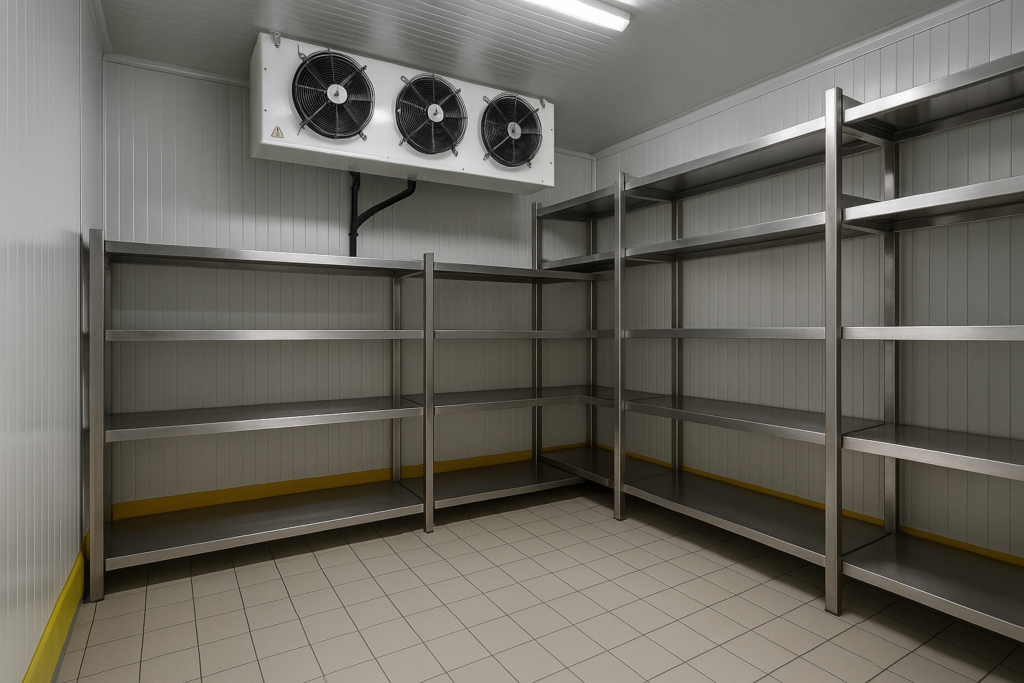
Common Walk In Freezer Failures During Heat Waves
High head pressure shutdowns are by far the most common type of failure during extreme heat events. Most modern walk in freezers have safety switches that cut power to the compressor when discharge pressures exceed safe limits, which prevents catastrophic damage but also stops cooling completely. When this happens, the system typically locks out and requires a manual reset along with a diagnosis of the underlying cause. Operators often hear the unit click on and off repeatedly before it gives up entirely. Without prompt attention, the freezer warms up and frozen product begins to thaw. These shutdowns are nature’s way of telling you that something in the system needs immediate professional attention.
Frozen evaporator coils represent another frequent issue that gets worse in summer heat, though the reason might surprise some operators. When humidity levels rise and door openings increase during busy summer service, more moisture enters the freezer and freezes onto the evaporator coil. A coil caked with ice cannot absorb heat from inside the box, which means temperatures climb even though the compressor is running constantly. Defrost cycles, which normally clear this ice on a regular schedule, may not be able to keep up with the increased moisture load. Eventually the coil becomes a solid block of ice and airflow stops completely. This problem often masquerades as a refrigerant or compressor issue when the real culprit is moisture management and defrost performance.
Electrical failures spike during heat waves for reasons that have less to do with the freezer itself and more to do with the entire electrical environment around it. Voltage drops are common when the local power grid is stressed by widespread air conditioning use, and low voltage causes motors to draw higher amperage to maintain output. Contactors pit and burn out, control boards fail, and wiring connections that have been loose for months finally let go under thermal expansion. The kitchen environment itself adds heat to electrical panels and component enclosures, pushing internal temperatures past design limits. Need walk in freezer repair right away? Click here for our walk in freezer repair service. Catching electrical problems early prevents the kind of complete failures that cost operators thousands in spoiled inventory.
Environmental Factors Affecting Walk In Freezer Performance
Outdoor condenser placement matters enormously when summer temperatures climb, and many older installations sit in spots that made sense at the time but cause problems today. A condensing unit baking in direct afternoon sun on a black tar roof can see ambient temperatures 20 or 30 degrees hotter than the actual air temperature. Units crammed into tight equipment alcoves with poor ventilation recirculate their own hot discharge air, creating a feedback loop that drives head pressures sky high. Even a unit with plenty of clearance can suffer if nearby exhaust fans or other rooftop equipment blow hot air toward it. Reviewing the physical environment around your condensing unit reveals opportunities to reduce heat load that have nothing to do with the freezer’s internal components.
Indoor environmental conditions inside the kitchen or storage area also have a major impact on walk in freezer performance. A bustling commercial kitchen running fryers, ovens, and dishwashers can push ambient temperatures well above 90 degrees during peak service. The walk in freezer’s outer walls and door must hold back this heat, and the system has to overcome any heat that does penetrate the insulation. Strip curtains on the door, when present and intact, dramatically reduce the cold air loss every time someone enters the freezer. Aging insulation, damaged door panels, and worn floor seals all increase the heat load that the refrigeration system must remove. Small improvements to the box itself often pay for themselves in reduced energy costs and longer equipment life.
Humidity is the silent enemy of walk in freezer performance during summer months, especially in food service environments where steam and moisture are constantly being generated. Every time the freezer door opens, warm humid air rushes in and that moisture freezes somewhere inside the box. Floors become slippery with frost, ceiling panels develop ice buildup, and the evaporator coil works harder to remove the constant moisture load. Drain lines that handle defrost water can also become problem spots during heat waves, especially if they pass through warm areas where condensation forms on the outside of the pipe. Proper management of door usage, drain heaters, and ventilation around the freezer makes a measurable difference in how well the system handles summer conditions. Routine attention to these details prevents the gradual buildup of problems that lead to mid summer failures.
How to Prevent Walk In Freezer Breakdowns in Extreme Heat
Preventive maintenance is the single most effective tool for keeping walk in freezers operating reliably when outdoor temperatures soar. Reactive repairs during a heat wave cost two to three times more than scheduled service, and that figure does not include the value of lost inventory or business interruption. A well maintained system can sail through 100 degree days while a neglected one fails on the first hot afternoon. The maintenance tasks that matter most for summer survival focus on heat rejection, airflow, and electrical integrity. Every commercial refrigeration system benefits from a consistent maintenance schedule, but the stakes get higher as the temperatures climb.
Walk In Freezer Maintenance Tasks Before Summer Heat Arrives
Condenser coil cleaning sits at the top of every pre summer maintenance checklist for good reason. A thorough coil cleaning involves removing the protective grilles, applying a non corrosive coil cleaner, and rinsing the fins with appropriate water pressure to flush out embedded debris. The fins themselves need inspection for damage because bent fins restrict airflow even after cleaning. Cottonwood fluff, kitchen grease, and general dust accumulate in different patterns depending on the location, and each requires the right cleaning approach. Some installations need cleaning twice a season because of heavy debris exposure. Skipping this single task is the most common reason walk in freezers fail during the first major heat wave of the year.
Refrigerant charge verification and electrical component testing round out the technical side of pre summer service. A qualified technician should check superheat and subcooling values to confirm the system has the correct refrigerant charge, not just an adequate one. Pressures alone do not tell the full story; proper diagnosis requires temperature readings combined with pressure data. Contactors, capacitors, fan motors, and control relays should be tested under load to identify weak components before they fail. Wiring connections need inspection and tightening because thermal cycling loosens terminals over time. Vortex Air HVAC technicians document baseline readings during maintenance visits so changes over time become easy to spot before they cause problems.
Door seals, gaskets, and overall box integrity deserve dedicated attention during pre summer maintenance because every air leak adds to the cooling load. Gaskets that look fine at first glance often have hairline cracks, compressed sections, or torn corners that let warm air infiltrate the box. The dollar bill test works well: close the door on a dollar bill, and if it pulls out easily, the gasket needs replacement. Door closers, hinges, and self closing mechanisms should be adjusted so the door seals fully every time it shuts. Thresholds, sweep gaskets, and corner seals all need inspection for wear. A walk in freezer with tight seals can hold temperature with significantly less compressor runtime, which directly extends equipment life during hot months.

Daily Walk In Freezer Checks for Extreme Heat Conditions
Daily temperature monitoring becomes critical during heat waves, and the checks should go beyond just glancing at the digital readout on the door. Operators should record both the box temperature and the actual product temperature in different zones of the freezer because warm spots reveal airflow or door seal problems early. Comparing morning and afternoon readings shows how well the system handles peak heat load. Any upward trend in temperature, even if still within safe limits, warrants attention before it becomes a crisis. Logging these readings creates a record that helps technicians diagnose intermittent problems when service is needed.
Visual and audible inspections take only a few minutes per day and catch a remarkable number of developing issues before they escalate. Walk around the condensing unit and look for excessive ice buildup on refrigerant lines, oil stains that indicate refrigerant leaks, or debris collecting against the coil. Listen for unusual compressor noises like rattling, knocking, or excessive vibration. Check that the condenser fan is spinning freely and that no warning lights are illuminated on the controller. Inside the box, look for ice accumulation on the evaporator coil or ceiling, and notice any change in airflow from the evaporator fans. These quick checks catch problems while they are still small enough to fix without an emergency call.
Defrost cycle observation deserves special mention because defrost problems multiply during humid summer weather. A properly functioning defrost cycle should clear the evaporator coil completely without leaving ice patches behind. Operators should know when their defrost cycles run and occasionally peek into the box during or just after a cycle to verify the coil is clean. Drain lines should flow freely without backing up or leaving puddles on the floor. Defrost timers and termination sensors can drift out of calibration, and the symptoms often appear gradually before causing complete coil freeze ups. Want to schedule walk in freezer maintenance to prepare for the hottest months? Click here for our walk in freezer maintenance service. Catching defrost issues early prevents the worst case scenario of a completely iced over evaporator during a heat wave.
Walk In Freezer Improvements That Help in Extreme Heat
Shading or relocating outdoor condensing units delivers some of the biggest performance improvements available for walk in freezers in hot climates. A simple shade structure over a rooftop condenser can drop the air entering the coil by 15 to 25 degrees during peak afternoon hours, which translates to dramatically lower head pressures and reduced compressor stress. Repositioning a unit out of direct sun or away from heat sources like exhaust vents pays similar dividends. Adequate clearance around the unit, typically 36 inches minimum on all sides with unobstructed airflow above, keeps the condenser breathing properly. These environmental upgrades reduce energy consumption year round but really shine during extreme heat events when every degree of inlet air temperature matters.
Adding or upgrading strip curtains, air curtains, and other infiltration barriers cuts cooling load significantly during summer months. Strip curtains made of clear PVC strips allow staff to walk through with carts while keeping most of the cold air inside the box. Replacing torn or missing strips costs very little and improves freezer performance immediately. For high traffic walk in freezers, electric air curtains provide an even more effective barrier when combined with strip curtains. Door alarms that beep when the door is left open longer than a set time train staff to close doors promptly. These low cost upgrades pay back quickly through reduced energy bills and less stress on the refrigeration system.
System upgrades and component replacements sometimes make more sense than continued repairs on aging equipment that struggles every summer. Adding a head pressure control valve or fan speed controller allows the condenser to operate efficiently across a wider range of ambient temperatures. Upgrading to electronically commutated motors on evaporator and condenser fans reduces electrical load and heat generation. Modern variable speed compressors handle partial load conditions much better than older single stage units and ride out heat waves with less stress. Replacement parts manufactured today often outperform original equipment from 10 or 15 years ago. A consultation with a qualified refrigeration technician can identify which upgrades make sense for a specific installation and how quickly they will pay for themselves.
Why You Need Professional Walk In Freezer Service in Utah County
Commercial walk in freezers represent significant investments and protect even larger investments in frozen inventory, which makes professional service essential rather than optional. The complexity of modern refrigeration systems, combined with EPA regulations on refrigerant handling, puts proper maintenance and repair well beyond the scope of in house staff. Heat related failures often involve multiple interacting problems that require systematic diagnosis to solve correctly. Vortex Air HVAC technicians arrive with the tools, training, and parts to handle whatever summer throws at your equipment. The cost of professional service is small compared to the cost of lost product, business interruption, and emergency repairs.
Walk In Freezer Service That Prevents Summer Emergencies
Scheduled maintenance from a professional refrigeration service catches problems while they are still small and inexpensive to fix. A technician performing routine service sees subtle warning signs that operators miss, like slightly elevated discharge temperatures, marginal capacitor readings, or early signs of compressor wear. These early interventions prevent the kind of catastrophic failures that strand operators with thawing inventory on the hottest day of the year. Maintenance also extends equipment life, often doubling the useful service of major components like compressors. Documented maintenance records also help with warranty claims and prove diligent care if insurance issues ever arise.
Emergency response capability matters enormously when a walk in freezer fails during extreme heat, and not every refrigeration company can deliver true 24 hour service. Vortex Air HVAC provides round the clock emergency service for commercial refrigeration customers because we understand that frozen inventory cannot wait until Monday morning. Our trucks carry the parts and refrigerants needed to address the most common heat related failures on the first visit. Quick response combined with proper diagnosis gets your freezer back to temperature before product is lost. The peace of mind that comes with knowing help is one phone call away has real value during the summer months.
Compliance with refrigerant regulations and food safety requirements adds another layer of complexity that professional service handles seamlessly. EPA Section 608 certification is required for anyone working with refrigerants, and violations carry significant penalties. Food safety regulations require documented temperature monitoring and prompt response to any refrigeration failures, both of which professional service supports. Refrigerant leak detection, repair documentation, and proper recovery procedures protect operators from regulatory issues. Working with a licensed commercial refrigeration contractor ensures every aspect of the work meets current standards.

Walk In Freezer Repairs Performed by Certified Technicians
Refrigerant system repairs require specialized training and equipment that go far beyond general HVAC work. Brazing refrigerant lines, evacuating systems to proper microns, charging with precision, and verifying performance all demand specific skills and tools. Diagnosing intermittent problems like flooding compressors, refrigerant migration, or marginal expansion valve operation takes experience that comes from working on commercial refrigeration day in and day out. Vortex Air HVAC technicians complete ongoing training on the latest refrigerants, equipment, and diagnostic techniques. This expertise translates into accurate diagnoses and lasting repairs that solve problems the first time.
Electrical repairs on commercial refrigeration systems involve hazards and complexities that demand professional attention. Three phase power, control circuits operating at multiple voltages, defrost timer sequences, and safety controls all interact in ways that can confuse even experienced electricians who do not specialize in refrigeration. Improper repairs can damage expensive components or create safety hazards for staff. Certified refrigeration technicians understand how all these systems work together and can troubleshoot complex problems systematically. The right repair the first time costs less than multiple attempts by less qualified personnel.
Component replacement decisions benefit from professional judgment about what to replace, when to replace it, and what to upgrade in the process. A failed compressor might mean simply replacing that component, or it might be a sign that the entire system has reached the end of its economic life. Experienced technicians can evaluate the overall condition of a walk in freezer and provide honest recommendations about repair versus replacement. They know which replacement parts offer better performance than the originals and which upgrades pay back quickly. This kind of guidance protects operators from spending good money on equipment that should be replaced.
Why Choose Vortex Air HVAC for Walk In Freezer Service
Vortex Air HVAC has built our reputation in Utah County on prompt, professional service that businesses can rely on. We are locally owned and operated, which means we understand the specific challenges that come with running a commercial kitchen or food service operation in this area. Our technicians are licensed and certified to work on commercial refrigeration equipment of all brands and ages. We invest in ongoing training so our team stays current with the latest refrigerants, controls, and energy efficient technologies. When you call Vortex Air HVAC, you get a refrigeration partner who cares about your business success.
Our 24/7 emergency service capability sets us apart for commercial refrigeration customers who cannot afford extended downtime. Walk in freezer problems do not respect business hours, and neither do we when our customers need help. Our service trucks stock the most common parts and refrigerants used in commercial refrigeration so we can complete repairs on the first visit whenever possible. We arrive when we say we will arrive, diagnose problems accurately, and provide clear pricing before work begins. This commitment to reliability has earned us long term relationships with restaurants, grocery stores, and food service operations throughout Utah County.
Vortex Air HVAC serves Orem, Provo, Lehi, American Fork, Pleasant Grove, Spanish Fork, Springville, and surrounding communities with comprehensive commercial refrigeration services. Need help keeping your walk in freezer running this summer? Click here for our walk in freezer repair service. Call us at (801) 400-2422 or email info@vortexairhvac.com to schedule maintenance, repairs, or emergency service. Our team is ready to help you protect your equipment and inventory through Utah’s hottest months. Trust the local experts who have been keeping commercial refrigeration running reliably for years.