Choosing the Right HVAC System for Your Home
Your home’s heating, ventilation, and air conditioning (HVAC) system is the unseen workhorse that ensures your family’s comfort and well-being throughout the year. It is one of the most significant and complex investments you will make in your property. Selecting a new HVAC system is a major decision with long-term consequences, directly impacting your daily comfort, your monthly energy expenses, and the overall value of your home. In a place like Orem, with our hot, dry summers and cold, snowy winters, choosing a system that can handle these diverse climate demands efficiently is absolutely essential.
The process of selecting a new system can feel overwhelming due to the sheer number of options, technical specifications, and efficiency ratings involved. However, by breaking down the decision into a series of manageable steps, you can approach the process with confidence. Understanding the different types of systems available, how to properly size a unit for your specific home, what energy ratings actually mean, and the importance of professional installation are all critical pieces of the puzzle. This information serves as a clear roadmap to help you navigate these choices and select an HVAC system that will provide reliable, efficient comfort for years to come.
Exploring Your Options: Types of Modern HVAC Systems
The first step in your journey is to understand the primary types of HVAC systems available for residential use. The most common configuration found in homes across Utah is the traditional split system, which consists of a central air conditioner paired with a furnace. The air conditioner’s condenser unit sits outside, while the furnace and the AC’s evaporator coil are located indoors, typically in a basement or utility closet. This combination uses a shared network of ductwork to distribute cool air in the summer and warm, forced air in the winter, providing a reliable solution for our four-season climate.


Another increasingly popular option is a heat pump system. A heat pump looks and functions just like a central air conditioner in the summer, efficiently moving heat from inside your home to the outside. In the winter, it reverses this process, extracting ambient heat from the outdoor air and transferring it inside to warm your home. Air-source heat pumps are incredibly efficient in milder temperatures, but they can struggle during Orem’s coldest winter days, often requiring a backup heat source, known as an auxiliary or emergency heat strip, to maintain comfort. For homes without existing ductwork, or for additions and specific zones like a garage or sunroom, ductless mini-split systems are an excellent and highly efficient solution. These systems use an outdoor compressor to power one or more indoor air handler units, each with its own thermostat, allowing for precise temperature control in different areas.
In some types of homes, you might find a packaged HVAC system. These units contain all the heating and cooling components in a single cabinet located outside, usually on the roof or on a concrete slab next to the house. Regardless of the type of equipment, many central systems can be enhanced with zoning. A zoned system uses a series of dampers within the ductwork to control the flow of air to different parts of the home independently, allowing you to set different temperatures for the upstairs and downstairs, for example. This can greatly improve comfort and reduce energy waste in larger or multi-level homes.
The Right Fit: Sizing Your System for Your Home
One of the most critical factors in the performance and efficiency of any new HVAC system is its size. It is a common misconception that when it comes to HVAC, bigger is always better. In reality, an improperly sized system, whether it is too large or too small, will fail to provide adequate comfort, will be inefficient to operate, and will be prone to premature mechanical failures. Proper sizing is not based on simple square footage alone; it requires a professional and detailed analysis of your home’s unique characteristics.
The industry standard for accurately sizing an HVAC system is a Manual J load calculation. This detailed process goes far beyond a simple estimate. A trained technician will account for a wide range of factors, including your home’s total square footage, ceiling height, the number and quality of your windows, the amount of sun exposure on different walls, the level of insulation in your walls and attic, and even the amount of air leakage in your home’s envelope. All these variables contribute to your home’s specific heating and cooling “load,” which is the amount of work the system needs to do to maintain a comfortable temperature.
The consequences of improper sizing are significant. An undersized unit will run constantly on the hottest and coldest days of the year, struggling to keep up and leading to excessive energy consumption and wear. An oversized unit, which is an even more common problem, will cool or heat the space too quickly and then shut off. This process, known as short cycling, prevents the system from running long enough to properly dehumidify the air in the summer, leaving your home feeling cold and clammy. This constant starting and stopping also puts immense strain on the system’s compressor, leading to a much shorter operational lifespan. A professional load calculation ensures you are investing in a system that is perfectly tailored to your home.
Decoding the Acronyms: A Guide to Energy Efficiency Ratings
When you begin comparing different HVAC models, you will be confronted with a series of acronyms that represent their energy efficiency ratings. Understanding these ratings is key to making a smart long-term investment. For air conditioning systems, the primary rating is SEER, which stands for Seasonal Energy Efficiency Ratio. Think of it as the miles per gallon (MPG) for your AC unit; the higher the SEER rating, the less electricity it uses to produce a certain amount of cooling. As of 2023, a new, more rigorous standard called SEER2 is used, providing an even more accurate picture of real-world efficiency.
For furnaces, the efficiency rating is AFUE, or Annual Fuel Utilization Efficiency. This is expressed as a percentage and tells you how much of the fuel your furnace consumes is converted directly into usable heat. A furnace with an AFUE of 95% means that 95 cents of every dollar you spend on natural gas becomes heat for your home, while the remaining 5 cents is lost through the exhaust process. A higher AFUE means less wasted fuel and lower heating bills.
If you are considering a heat pump, it has two efficiency ratings. Its cooling efficiency is measured by SEER2, just like an air conditioner. Its heating efficiency is measured by HSPF, the Heating Seasonal Performance Factor. Similar to SEER2, this has been updated to the HSPF2 standard for greater accuracy. A higher HSPF2 rating indicates a more efficient heating performance. While units with higher efficiency ratings typically have a higher upfront purchase price, the year-over-year savings on your utility bills in a four-season climate like ours can often result in a lower total cost of ownership over the life of the system.
Powering Your Comfort: Fuel Sources and Utility Costs
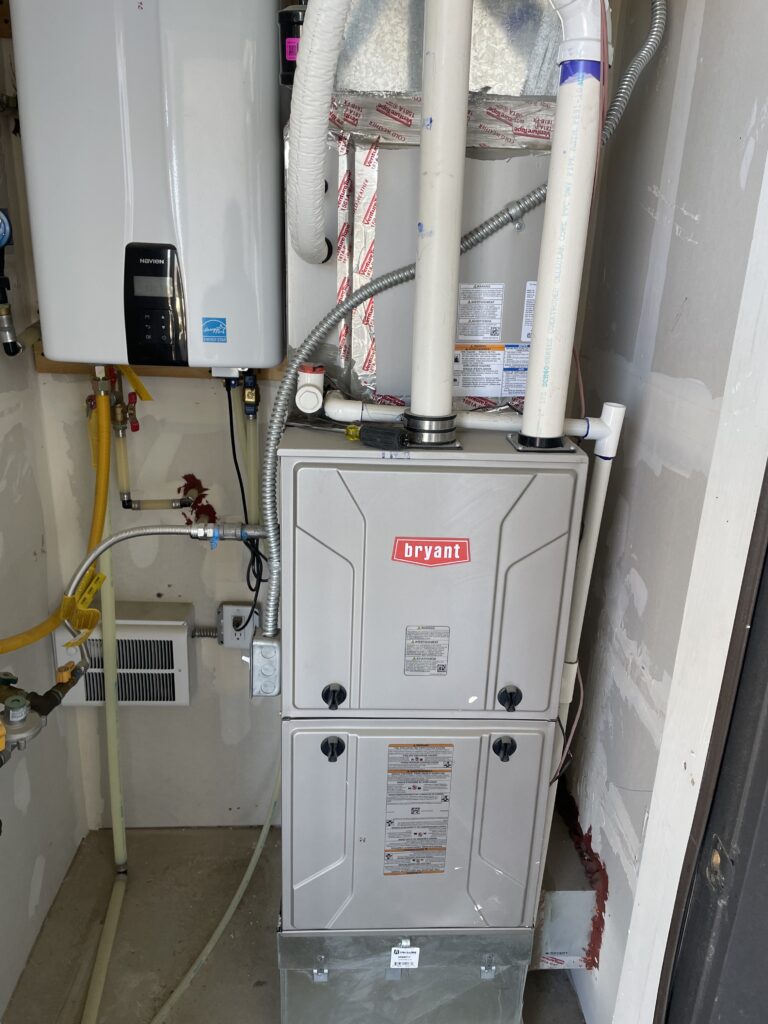
The type of fuel your heating system uses is another important consideration that will impact your long-term operating costs. In the Orem area, the most common fuel sources for residential heating are natural gas and electricity. If your home already has a natural gas line, a high-efficiency gas furnace is often the most cost-effective way to heat your home during our cold winters, as natural gas has historically been less expensive than electricity for producing heat.


If your home does not have access to a natural gas line, your primary option will be an electric system. This could be a traditional electric furnace, which uses electric resistance coils to generate heat, or a heat pump. As mentioned, heat pumps are very efficient at moving heat, but their performance diminishes as the outdoor temperature drops toward freezing. For this reason, heat pumps installed in Utah almost always require a supplementary heat source. This backup, often called an auxiliary or emergency heat strip, is essentially a small electric furnace that kicks in to help the heat pump on the coldest days, ensuring your home stays warm. It is important to factor in the cost of local utilities when making your decision, as the price of electricity versus natural gas will directly affect your monthly bills.
Embracing Technology: Smart Features for Modern Comfort
Modern HVAC systems offer a range of advanced technological features designed to improve comfort, increase efficiency, and provide greater control. One of the most significant advancements is the move away from single-stage operation. Traditional systems were either fully on or fully off. Many new systems, however, feature two-stage compressors and variable-speed motors. A two-stage system can run at a lower, more energy-efficient capacity on milder days, and then ramp up to full capacity when needed. Variable-speed motors can adjust the speed of the airflow with incredible precision.
These features work together to provide more consistent temperatures throughout your home, eliminating the dramatic temperature swings often felt with older systems. They also offer superior humidity control during the summer and operate at much quieter sound levels. To fully leverage this technology, pairing your new system with a smart thermostat is essential. A smart thermostat allows you to control your home’s climate remotely from your phone, and it can learn your family’s schedule to automatically optimize your energy usage. The combination of a variable-speed HVAC system and a smart thermostat represents the pinnacle of modern home comfort and efficiency.
The Critical Decision: When to Repair vs. Replace
For homeowners with an existing HVAC system, one of the most challenging decisions is whether to continue repairing an aging unit or to invest in a full replacement. While every situation is unique, there are several key factors to consider. The age of your system is a primary indicator. A typical central air conditioner or furnace has a lifespan of about 12 to 15 years. If your system is approaching or has surpassed this age, the likelihood of major component failure increases significantly, and replacement often becomes the more financially prudent option.
The frequency and cost of repairs is another major consideration. If you find yourself calling for service every year and the repair bills are beginning to add up, you may be sinking money into a system that is on its last legs. A common guideline is the “50 percent rule”: if the cost of a single repair is close to half the cost of a new system, replacement is generally the better investment. Steadily rising utility bills, even with regular maintenance, are another sign that your system is losing its efficiency and nearing the end of its life.

Finally, consider any changes to your home. If you are planning a home addition or have recently finished your basement, the heating and cooling load of your home has changed. Your old system may no longer be properly sized to handle the new space, making a new, correctly sized system necessary. A new system also offers benefits beyond simple function, including improved indoor air quality through better filtration and a reduced environmental impact due to higher efficiency and the use of modern refrigerants.
Your Expert Partner: Working with a Professional HVAC Contractor
Making the right choice for your home requires expert guidance. The benefits of having a licensed, professional HVAC technician assess your home and your needs cannot be overstated. A true professional will do far more than just give you a price on a new unit; they will serve as a consultant, helping you understand your options and design a system that is perfectly suited to your property and your family.
During an in-home consultation with Vortex Air HVAC, our technician will listen to your concerns, whether they are about high energy bills, inconsistent temperatures, or a desire for new features. We will perform a thorough inspection of your existing system and ductwork. Most importantly, we will conduct a detailed load calculation to ensure any new system we recommend is precisely the right size for your home. We will then present you with clear, easy-to-understand options and provide a detailed, itemized estimate without any high-pressure sales tactics.
Choosing a new HVAC system is a significant decision that will influence your family’s comfort and your household budget for many years. By taking the time to understand the different system types, the critical importance of proper sizing and energy efficiency, and the value of a professional installation, you can make this choice with confidence. A well-chosen system is a reliable, long-term investment in the comfort and value of your Orem home.
If you are considering replacing your HVAC system or would like to learn more about the modern, high-efficiency options available, we encourage you to contact the experts at Vortex Air HVAC. We are dedicated to helping our neighbors make informed decisions and providing the highest quality installation services in the area. We welcome you to call us for a comprehensive, no-obligation consultation and quote.