
Why Clogged Dryer Vents Are a Hidden Fire Hazard
Your clothes dryer pushes a steady stream of hot, moist air out of your home every time you run a load, and that air carries fine cotton lint with it. Most of the lint gets caught by the screen inside the door, but a meaningful amount slips past and settles inside the duct that runs from the back of the appliance to the exterior wall. Over months and years, that fine layer builds into a thick mat that chokes airflow and traps heat exactly where you do not want it. The National Fire Protection Association has consistently reported that clothes dryers are involved in thousands of home structure fires each year in the United States, and failure to clean the vent is the leading contributing factor by a wide margin. What makes this problem so dangerous is that it develops silently, with no alarm, no leak, and no obvious noise to warn you. Homeowners in Orem, Provo, and Lehi often tell us the dryer simply seemed slower for a while before anything went wrong. Fall makes the risk worse, because windows stay closed, laundry volume climbs with school schedules and holiday hosting, and more households dry heavy blankets and coats indoors. Understanding how the hazard forms is the fastest way to stop it before it starts.
How a Clogged Dryer Vent Becomes a Fire Hazard in Your Home
A dryer is a heat machine and an air machine working together, and it only stays safe when both halves function properly. Heated air passes through the drum, picks up moisture from wet clothing, and then has to leave the building quickly. When the exhaust path narrows, the heat stays inside the cabinet and the ductwork instead of escaping outdoors. Lint is the fuel, restricted airflow is the accelerant, and the heating element or gas burner is the ignition source. Put those three together in a confined metal tube and you have the recipe that fire investigators find again and again. The good news is that each part of that chain is preventable with regular attention.
The Lint Buildup That Turns a Clogged Dryer Vent Into a Fire Hazard
Lint is nothing more than short cotton and polyester fibers shed from fabric as it tumbles, and those fibers are extremely light, extremely dry, and extremely easy to ignite. Fire crews and safety instructors have used dryer lint as tinder for decades because a single spark will take hold of it almost instantly. The screen in your dryer door captures the largest share, but no screen captures everything, and the finest particles pass straight through into the exhaust duct where nobody sees them. Those particles cling to the interior walls of the duct, especially at seams, joints, and any spot where the airflow slows or changes direction. Moisture from the wet clothing dampens the first layer, which then dries into a felt like crust that grabs the next round of fibers even more effectively. Within a year of normal family use, a duct that started out clear can carry a coating thick enough to cut airflow substantially. In homes with pets, heavy bedding loads, or several loads per day, that timeline compresses dramatically.
The trouble compounds because lint does not distribute itself evenly through the duct. It gathers heavily right behind the dryer where the flexible transition hose sits, and it gathers again at every elbow where the moving air slams into a wall and loses velocity. It also collects at the exterior termination, packed against the damper flap that opens and closes with each cycle. Those three pinch points act like partial dams, and once one of them narrows, everything upstream begins to load up faster than before. Airflow and lint accumulation feed each other in a loop that accelerates rather than staying steady. That is why a vent can seem acceptable for two years and then fail noticeably in the third. By the time drying performance clearly suffers, the duct is usually far more blocked than the homeowner imagines.
Temperature is the final ingredient that turns accumulated lint from a nuisance into a genuine fire hazard. Dryer exhaust typically runs well above comfortable room temperature, and a restricted duct pushes those numbers higher because the heat has nowhere to go. Electric dryers use a glowing resistance coil, and gas dryers use an open flame, so both create conditions where a stray ember or an overheated surface can meet packed fuel. Manufacturers install a thermal fuse and a high limit thermostat as safety devices, but those parts are a backstop, not a maintenance plan. Repeatedly tripping a thermal cutoff is a signal that the appliance is fighting a restriction it was never designed to overcome. A vent cleaning removes the fuel side of the equation entirely and lets the heat escape the way the engineers intended. Ready to eliminate the fuel source in your exhaust line? Click here for our dryer vent cleaning service.

Heat, Airflow, and the Clogged Dryer Vent Fire Hazard Most Homeowners Miss
Airflow is the quiet variable that determines almost everything about dryer safety and dryer performance. A residential dryer is engineered around a specific volume of air moving through a four inch duct at a specific rate, and every foot of duct, every bend, and every layer of lint subtracts from that number. When the blower cannot move its designed volume, the air inside the drum gets hotter than intended and the moisture takes far longer to leave. Clothes then sit in high heat for extended periods, which is why fabrics feel scorched and elastic breaks down early in homes with restricted vents. The appliance itself also suffers, because the motor runs longer cycles and internal components endure heat they were not built to tolerate indefinitely. None of this shows up on a gauge in your laundry room, which is precisely why it goes unnoticed for so long.
Gas dryers carry an additional risk that deserves specific attention from anyone with a gas appliance in the home. Combustion produces carbon monoxide, and the exhaust duct is the only path that gas has out of the house. A severely blocked vent can force combustion byproducts back into the laundry area, creating an invisible and odorless danger alongside the fire risk. Carbon monoxide detectors on every level of the home are essential, and they should be tested regularly rather than assumed functional. If your dryer is gas fired and the vent has never been professionally cleaned, treat that as a priority rather than a someday project. The same restriction that traps heat also traps the products of combustion, so one cleaning addresses both problems at once.
Energy cost is the third consequence, and it is the one homeowners feel every month even when they do not connect it to the vent. A dryer fighting a clogged duct may need two or three cycles to finish a load that should take forty five minutes, and each of those extra cycles draws full power or full gas input. Across a year of laundry for a family of four, the wasted energy adds up to real money on the utility bill. Restricted venting also dumps excess heat and humidity into the laundry room, which makes your air conditioner work harder in warm months and encourages condensation and mildew in cool ones. Utah County homes with laundry rooms on interior walls or upper floors tend to feel this most sharply. Clearing the duct restores the appliance to its rated efficiency and usually shortens cycle times immediately. Want cleaner air moving through the rest of your home too? Click here for our air duct cleaning service.
Duct Material and Layout Problems That Make a Clogged Dryer Vent a Fire Hazard
Not every dryer vent starts life on equal footing, and the material behind your appliance has an enormous effect on how quickly a hazard develops. Thin white vinyl duct and the accordion style foil duct sold in hardware stores are the worst offenders, because their ridged interiors catch fiber at every corrugation and their flimsy walls crush easily when the dryer gets pushed back against the wall. Building codes have moved decisively toward rigid metal duct with smooth interior walls precisely because smooth surfaces shed lint instead of collecting it. Joints should be assembled so the male end points in the direction of airflow, and they should be secured with foil tape or clamps rather than screws that project into the airstream. Screws inside the duct create a lint catching hook at every fastener, and we find them constantly during inspections of older installations. If your transition hose is plastic or accordion foil, replacing it with a rigid or semirigid metal product is one of the cheapest safety upgrades available.
Duct length and bend count matter just as much as material, and this is where many homes run into trouble without anyone realizing it. The International Residential Code generally limits total duct length to 35 feet, with deductions of roughly 2.5 feet for each 45 degree bend and 5 feet for each 90 degree elbow, unless the dryer manufacturer’s instructions specify otherwise. A laundry room in the center of a house or on a second floor can blow past that limit quickly once the duct routes through joist bays and up through walls. Every elbow slows the air and creates a deposit zone, so a run with four turns behaves very differently from a straight run of the same length. Where long runs are unavoidable, a properly installed booster fan sized for dryer exhaust can restore adequate airflow. That equipment needs professional sizing and placement, because an incorrectly installed booster can make performance worse instead of better.
Termination details cause the last category of preventable problems, and they are easy to overlook because they sit outside where nobody looks. Dryer exhaust must discharge to the exterior, never into an attic, crawlspace, garage, or soffit cavity, since dumping warm moist lint into a building cavity invites both fire risk and serious moisture damage. The exterior hood should use a swinging damper flap that opens with airflow and closes when the dryer stops, and it should never have a mesh insect screen across the opening. Screens seem sensible but they blind over with lint within weeks and create a total blockage at the worst possible spot. Birds and rodents will nest in a vent hood with a broken or missing flap, sometimes packing the last few feet of duct completely solid. During a service visit our technicians verify the termination from outside, clear anything living in it, and confirm the damper opens and closes freely.
Warning Signs of a Clogged Dryer Vent Fire Hazard You Can Check Today
You do not need special tools to spot most symptoms of a restricted dryer vent, and paying attention for one week is usually enough to know where you stand. The signs fall into three groups: how long the dryer takes, what you smell and feel in the room, and what is happening at the exterior hood. Any single symptom is worth investigating, and two or more together mean the vent needs service promptly. Homeowners often dismiss these clues as the dryer simply getting old, then discover the appliance was fine and the duct was the entire problem. Run through the checks below the next time you do laundry. It takes about five minutes and it could change the outcome of your year.
Drying Time Clues That Point to a Clogged Dryer Vent Fire Hazard
The clearest signal is a load that will not finish in a single cycle, and it is the one nearly every affected household notices first. A standard load of cotton towels should dry in roughly forty five minutes to an hour in a properly vented machine, and jeans or heavy bedding may take somewhat longer. When you find yourself restarting the dryer routinely, or when clothes come out still damp at the seams and waistbands, airflow is the first suspect rather than the heating element. Many people replace a perfectly good appliance over this symptom and then discover the new dryer performs exactly the same way. The duct, not the machine, was the limiting factor all along. Comparing today’s drying time to what you remember from a year or two ago gives you a useful baseline even without any measurements.
Watch for cycles that seem to shut off early or for a dryer that stops midway and refuses to restart until it cools. That behavior usually means a thermal cutoff or high limit thermostat is doing its job and interrupting operation because internal temperatures climbed too high. Some homeowners replace the fuse, get a few weeks of normal function, and then face the same failure again without ever addressing the cause. A thermal fuse that blows repeatedly is a symptom of restricted exhaust in the overwhelming majority of cases we encounter. Continuing to replace the part while ignoring the duct leaves the underlying fire risk fully intact. Clearing the vent removes the condition that keeps tripping the safety device in the first place.
Pay attention to the clothes themselves as they come out of the drum at the end of a cycle. Fabrics that feel unusually hot to the touch, rather than warm and dry, indicate the drum is running above its design temperature. Elastic waistbands that lose their stretch prematurely, shirts that develop a faintly scorched smell, and synthetics that show early pilling all point toward excessive heat exposure. Lint appearing on the outside of clothing or gathering around the door gasket suggests air is backing up rather than flowing out cleanly. You may also notice the laundry room floor collecting more dust than it used to, which happens when exhaust escapes at loose duct joints. These small details tell an accurate story about what is happening inside a duct you cannot see.
Smells, Heat, and Moisture Signs of a Clogged Dryer Vent Fire Hazard
A burning or musty odor during operation deserves immediate attention and should never be written off as normal appliance smell. Hot lint gives off a distinct scorched fiber scent that many homeowners describe as similar to burning hair or an overheated vacuum cleaner. If you notice that odor, stop the dryer, let it cool completely, and schedule service before running another load. A musty or sour smell points to a different but related problem, which is moisture that never made it out of the duct and is now sitting in the line. That trapped humidity supports mold growth inside the ductwork and pushes damp air back into your living space every cycle. Neither smell resolves on its own, and both trace back to exhaust that is not leaving the building the way it should.
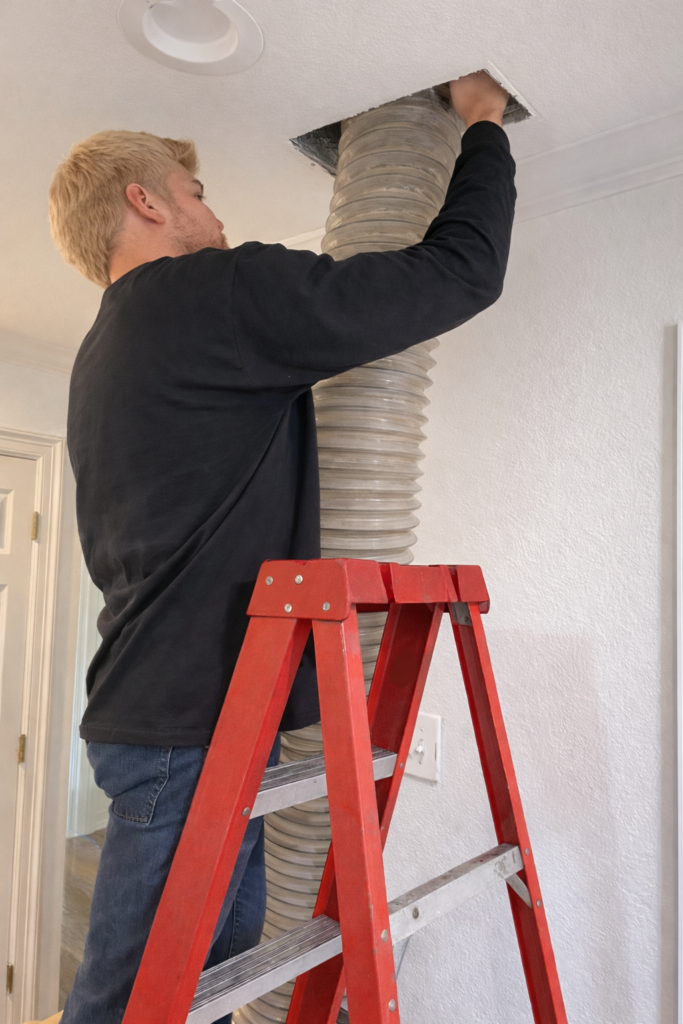
The laundry room environment itself gives you reliable information about vent performance. A room that turns noticeably hot and humid during a dryer cycle is receiving heat and moisture that belong outdoors, which means the duct is leaking, blocked, or both. Check the walls and ceiling near the duct run for condensation, staining, peeling paint, or soft drywall, since those are signs that moist air has been escaping into the structure for some time. Feel the flexible transition hose behind the dryer while a load runs; it should be warm but not uncomfortably hot to hold briefly. Also look at how the hose is positioned, because a duct crushed flat against the wall behind the appliance restricts airflow just as effectively as a lint clog. Correcting that single issue sometimes restores half the lost airflow instantly.
Trapped humidity from a blocked dryer vent affects the whole house, not just the room where the appliance lives. Elevated indoor moisture encourages dust mites, supports mold on cool surfaces, and makes heating and cooling equipment work harder to maintain comfort. In the fall, when Utah homes close up for the season and ventilation drops, that added moisture has fewer ways to dissipate naturally. Households already dealing with allergies or asthma tend to feel the difference first as symptoms worsen indoors. Addressing the dryer vent removes one significant and often overlooked moisture source from the equation. Concerned about the air quality in your home this season? Click here for our home air purification service.
Outside Vent Hood Checks for a Clogged Dryer Vent Fire Hazard
Step outside while someone runs the dryer and put your hand near the exterior vent hood to feel the discharge. You should feel a strong, steady push of warm air that you can detect from a foot or two away without effort. Weak airflow, intermittent puffing, or nothing at all confirms a restriction somewhere between the appliance and the wall. This test takes under a minute and it is the single most informative check available to a homeowner. It also tells you the problem is real before you spend money replacing a dryer that never needed replacing. Make it a habit each fall alongside your other seasonal maintenance tasks.
Examine the hood itself closely for physical problems that block airflow independent of lint buildup. The damper flap should hang closed at rest and swing open freely when the dryer runs, without sticking, sagging, or catching on a bent frame. Lint packed around the hinge, paint sealing the flap shut, or a flap broken off entirely are all common findings. Look for any mesh screen across the opening and have it removed, because that screen will clog no matter how diligent you are about the interior lint trap. Nesting material, feathers, or twigs visible in the opening mean wildlife has claimed the duct and the blockage is likely severe. Landscaping crowding the hood, such as shrubs grown up against the wall, also restricts discharge and should be trimmed back.
Note where the vent terminates in relation to the rest of your home and your neighbor’s property. Codes require dryer exhaust to discharge away from windows, doors, and air intakes so that moist lint laden air does not get pulled straight back inside. A vent terminating under a deck, into a window well, or a few inches from a fresh air intake creates recirculation problems that no amount of cleaning will solve. Vents that exit near the ground collect debris and snow drift during Utah winters, which can seal the opening entirely during a storm. If you find any of these conditions, the termination needs to be relocated by a qualified technician rather than simply cleared. Correcting the layout once permanently reduces the rate at which the duct reloads with lint.
Why You Need Professional Dryer Vent Cleaning Before the Heating Season
Fall is the right time to handle dryer vent cleaning, because laundry volume rises, windows close, and the whole house shifts into a sealed heating season pattern. A blower and a shop vacuum at the wall opening will pull some surface lint, but neither reaches the packed deposits at elbows, long runs, and the exterior termination. Professional cleaning uses rotating brush systems driven through the full length of the duct along with high volume vacuum capture, so the debris leaves the house instead of relocating within it. Our technicians also inspect the material, the connections, the length, and the hood, then tell you plainly what needs correcting. That combination of cleaning and inspection is what actually removes the hazard rather than postponing it. Vortex Air HVAC serves homeowners across Orem, Provo, Lehi, American Fork, Pleasant Grove, Springville, Spanish Fork, Saratoga Springs, and the surrounding Utah County communities.
What Professional Dryer Vent Cleaning Removes From a Fire Hazard Vent
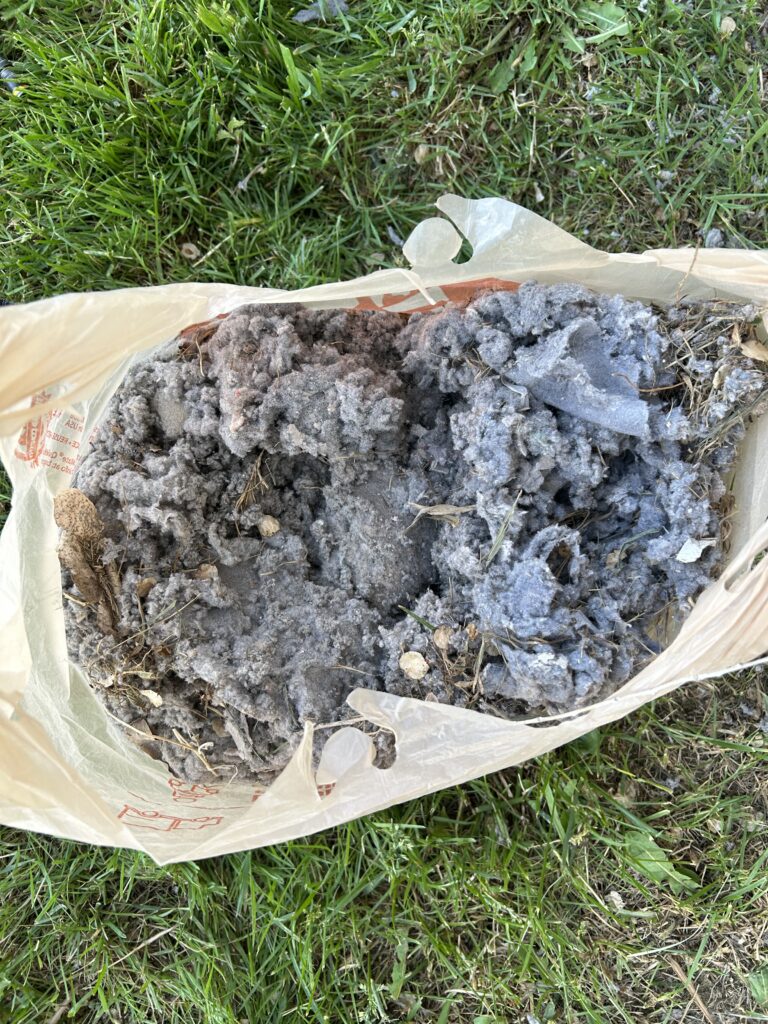
A thorough cleaning starts at the appliance and works outward through every foot of the duct system rather than treating only the accessible ends. Technicians disconnect the dryer, clear the transition hose or replace it when the material is unsafe, and clean the appliance blower housing where lint frequently packs solid. Rotating brushes on flexible rods travel the full run and scrub the interior walls while a vacuum captures released material at the source. Elbows get special attention because that is where the heaviest deposits form and where a partial clean leaves the biggest problem behind. The exterior hood is cleared, the damper is tested, and any nesting material is removed completely.
The inspection portion of the visit often matters as much as the cleaning itself for long term safety. We check duct material against current standards, verify the length and bend count fall within allowable limits, and look for screws penetrating the airstream. Crushed sections behind the appliance, disconnected joints inside walls, and terminations dumping into attics or crawlspaces all get documented with clear explanations. You receive straightforward recommendations rather than pressure, and you decide what to address and when. Correcting a layout problem once means the duct stays cleaner for years afterward.
The difference in performance is usually obvious with the very next load of laundry. Drying times drop back toward normal, the laundry room stops feeling like a sauna, and the scorched fabric smell disappears. Energy use falls because the appliance stops running multiple cycles to accomplish one load’s worth of work. Most importantly, the fuel that made your duct a fire hazard is physically gone from the house. Need your dryer vent cleared before the busy holiday laundry season? Click here for our dryer vent cleaning service.
How Often Dryer Vent Cleaning Should Happen to Prevent a Fire Hazard
Once a year is the baseline recommendation for a typical household running four to six loads per week through a reasonably short duct run. That interval keeps accumulation well below the level where airflow suffers and gives a technician a regular chance to catch developing problems. Scheduling it in the same season each year makes it easy to remember and easy to budget. Many homeowners pair it with furnace service so both tasks happen in one fall appointment. Consistency matters more than the exact calendar date you choose.
Several conditions justify cleaning more often than once a year, and they are common in growing Utah County households. Large families running daily loads, homes with shedding pets, ducts longer than about twenty five feet, and runs with three or more elbows all accumulate lint faster. Households that dry a lot of towels, bedding, or fleece also generate significantly more fiber per load than average. In those situations, cleaning every six to nine months keeps performance steady and risk low. Your technician can recommend an interval based on what the duct actually looks like at the first visit.
New construction and recent home purchases deserve a cleaning and inspection regardless of how long ago the last one happened. Drywall dust, construction debris, and installation shortcuts frequently show up in ducts that have never carried a single load of laundry. Buyers of existing homes rarely receive any documentation about dryer vent history, so assuming the worst is the safe approach. A single inspection establishes your baseline and tells you what you are working with. From there, an annual schedule keeps the system predictable and safe.
Why Choose Vortex Air HVAC for Dryer Vent Cleaning and Fire Hazard Prevention
Vortex Air HVAC is locally owned and operated, and we serve both residential and commercial customers throughout Utah County and the surrounding areas. Our licensed and certified technicians work on heating, cooling, ventilation, and refrigeration systems every day, which means we understand airflow as an engineering problem rather than a one task chore. That background lets us spot duct, moisture, and combustion issues that a single service crew might walk past. We explain what we find in clear language and give you the information you need to make your own decision. No pressure, no upselling, and no vague answers.
We show up when we say we will and we treat your home with care from the first knock to the final cleanup. Emergency service is available around the clock, because heating and ventilation problems rarely wait for business hours. Our team also handles energy efficient upgrades for homeowners who want lower utility bills alongside better safety. Reaching us is simple at (801) 400-2422 or info@vortexairhvac.com, and our office sits at 776 W 165 S in Orem. Same day appointments are frequently available during the fall season.
Fall is the busiest stretch of the year for home comfort systems, so combining services into one visit saves you both time and money. A technician can clean the dryer vent, service the furnace, and evaluate your ductwork in a single appointment. Getting all of it handled before the first hard freeze means you head into winter with equipment you can count on. Thousands of preventable dryer fires happen every year in American homes, and nearly all of them trace back to a duct nobody cleaned. Getting your heating system ready for winter as well? Click here for our furnace maintenance service.