How to Tell if Your Furnace Is Working Harder Than It Should
Most furnaces do not fail without warning; they struggle for weeks or months first, and the signs are easy to miss when you are busy with everything else that fall brings. A furnace that works harder than it should still produces heat, so nothing feels broken, yet it burns more gas, moves less air, and wears out parts faster than the manufacturer ever intended. Homeowners in Orem, Provo, Lehi, and the rest of Utah County usually notice the problem first on the utility bill, then in the rooms that never quite reach the thermostat setting. By the time the system quits on a cold January night, the underlying cause has often been building since September. The good news is that an overworked furnace gives off clear physical clues: run times, sounds, airflow, flame behavior, and temperature differences from room to room all shift in predictable ways. Learning to read those clues lets you fix a fifty dollar problem before it becomes a two thousand dollar problem. This guide walks through the symptoms, the causes behind them, and the steps that bring a strained heating system back to normal operation.
Warning Signs Your Furnace Is Working Harder Than It Should
A strained furnace changes its behavior in ways you can observe without any tools at all, and paying attention for a single week gives you most of the information a technician would want to know. Track how long the burners stay lit, how often the system starts, how strong the air feels at the registers, and how far apart the upstairs and downstairs temperatures drift. Compare your current gas usage against the same month last year, since utility statements almost always include a twelve month history. Listen for new sounds during startup and shutdown, because a blower fighting resistance sounds noticeably different from one moving air freely. Note any rooms that stay cold no matter where you set the thermostat. Those five observations separate a healthy system from one running at the edge of its limits.
Short Cycling Is a Common Sign Your Furnace Is Working Harder Than It Should
Short cycling describes a furnace that fires up, runs for only three to five minutes, shuts down, and then restarts a short time later without ever satisfying the thermostat. A properly matched furnace in cold weather should run in cycles lasting roughly ten to fifteen minutes, with longer run times on the coldest days of the year. When the burners cut out early and the blower keeps running afterward, the high limit switch has almost certainly tripped because the heat exchanger climbed past its safe operating temperature. That safety device is doing exactly what it was designed to do, and it will keep protecting the equipment for a while, but it was never meant to act as a normal part of the heating cycle. Every ignition sequence puts stress on the igniter, the gas valve, and the metal of the heat exchanger itself as it expands and contracts. A furnace cycling four or five times an hour accumulates years of that wear in a single winter.
The most frequent cause of high limit trips is restricted airflow across the heat exchanger, which traps heat inside the cabinet instead of carrying it into the ductwork. Manufacturers publish a temperature rise range on the furnace rating plate, commonly somewhere between thirty and sixty degrees Fahrenheit, and the system must operate inside that window to stay healthy. When a clogged filter, a collapsed flex duct, or a failing blower motor cuts the volume of air moving through the equipment, the temperature rise climbs well above the rated maximum. The furnace responds the only way it can, by shutting the burners down and waiting for things to cool. Homeowners often interpret the pattern as a thermostat problem and replace a perfectly good thermostat. The actual fix usually sits somewhere in the air path rather than on the wall.
Oversized equipment produces a similar pattern for an entirely different reason, and it is remarkably common in homes where a contractor simply matched the replacement furnace to whatever was there before. A furnace with far more capacity than the house needs blasts the space up to the setpoint in a few minutes, shuts off, and leaves the structure to cool unevenly before firing again. That behavior wastes fuel during every startup, when combustion efficiency is at its lowest, and it never lets the blower distribute air long enough to even out temperatures between floors. Rooms farthest from the furnace end up cold while the hallway near the thermostat feels warm. Correct sizing comes from a room by room load calculation that accounts for insulation levels, window area, air leakage, and local design temperatures. Utah County winters call for real numbers, not a guess based on square footage alone.
Rising Energy Bills Show a Furnace Working Harder Than It Should
Fuel consumption is the most honest report card a heating system can produce, because it reflects total run time and combustion efficiency at the same time. Pull up your gas statements and compare the current month against the same month one and two years ago, adjusting mentally for how cold the season has actually been. A jump of fifteen or twenty percent with no change in thermostat habits points to a system that needs more run time to deliver the same amount of heat. That extra run time comes from somewhere: heat escaping through leaky ducts, air moving too slowly across the heat exchanger, burners running out of adjustment, or a home losing heat faster than it used to. Each of those causes has a specific fix, and most of them cost far less than the fuel they waste. Ignoring the trend simply means paying for the problem every month until the equipment finally fails.
Combustion quality plays a larger role than most homeowners realize, and it shifts over time as components age and accumulate residue. Burners collect dust and rust flakes that disrupt the flame pattern, a dirty flame sensor weakens the microamp signal that tells the control board the burners are lit, and a partially blocked flue restricts the venting the appliance depends on. Elevation matters here too, since homes along the Wasatch Front sit roughly forty five hundred feet above sea level and gas appliances often require specific setup for high altitude operation. A furnace running slightly rich or slightly lean loses efficiency on every single cycle, and nothing about the flame is visible once the burner compartment door goes back on. Combustion analysis with a calibrated meter catches those issues in minutes. It is one of the clearest differences between a real tune up and a quick filter swap.
Age changes the math as well, and there comes a point where repair spending stops making sense. A furnace built in the 1990s likely carries an AFUE rating near seventy or eighty percent, meaning twenty to thirty cents of every dollar in fuel goes straight up the flue. Modern condensing furnaces reach ninety five percent or better by pulling additional heat out of the exhaust gases before venting them through PVC pipe. On a home spending fifteen hundred dollars a year on heating, that difference alone can return several hundred dollars annually, before counting the reduced repair costs of newer equipment. Most gas furnaces last fifteen to twenty years with regular service, and rising bills combined with frequent repairs after year fifteen usually signal that replacement is the better investment. Want the furnace running efficiently again before the first hard freeze? Click here for our furnace maintenance service.
Weak Airflow and Uneven Heat Point to a Furnace Working Harder Than It Should
Hold your hand in front of a supply register while the blower runs and pay attention to both the force and the temperature of the air. Strong, warm airflow means the blower is moving its rated volume and the heat exchanger is transferring energy properly. Weak airflow that feels barely warm indicates the system is struggling somewhere between the return grille and the register, and the furnace has to run much longer to satisfy the thermostat. Check several registers throughout the house rather than just one, since a single weak outlet often points to a local duct issue while widespread weakness points to the equipment or the main trunk lines. Rooms at the end of long duct runs suffer first because they have the least static pressure available. A ten degree spread between the warmest and coldest rooms in the house is a reliable sign of a distribution problem.
Static pressure is the measurement that turns those observations into hard data, and most residential systems are designed to operate around half an inch of water column total external static pressure. Field testing routinely finds systems running at double that figure, which is roughly equivalent to a person breathing through a straw all winter. High static pressure forces the blower motor to work against resistance it was never designed to overcome, and the consequences show up as reduced airflow, overheated heat exchangers, and premature motor failure. Variable speed motors mask the symptom by ramping up to maintain airflow, which quietly increases electrical consumption while hiding the real problem from the homeowner. Undersized return ducts, restrictive filter racks, crushed flex duct in the crawl space, and closed dampers all contribute. Measuring static pressure takes a technician about ten minutes and explains a surprising number of comfort complaints.
Sound provides another useful diagnostic, since air moving through a properly sized duct system stays relatively quiet. A whistling noise at the filter slot means air is being pulled through too small an opening at high velocity. Rumbling or booming from the ductwork during startup often comes from sheet metal flexing under pressure it was not built to handle. Squealing during blower operation typically points to worn bearings or a failing belt on older equipment, while a grinding sound calls for shutting the system down until a technician inspects it. Delayed ignition produces a small boom at the start of a cycle, and that particular sound deserves immediate professional attention because it involves gas accumulating before the flame lights. Curious what your system is telling you? Click here to learn more about our furnace repair services.
What Makes a Furnace Work Harder Than It Should in Utah Homes
The causes behind an overworked furnace fall into a handful of predictable categories, and Utah County conditions make several of them worse than they would be elsewhere. Dry desert air carries fine dust that loads filters faster than manufacturers assume in their service intervals. Winter inversions along the Wasatch Front trap particulates near the valley floor, and every one of those particles eventually reaches your return grilles. Many homes here were built with ductwork routed through unconditioned crawl spaces and attics, where losses run high and connections loosen over the years. Add construction dust from the ongoing growth in Lehi, Vineyard, and Saratoga Springs, and residential heating systems in this valley face a heavier load than the design conditions ever anticipated. Knowing which category applies to your home determines the fix.
Dirty Filters and Blocked Returns Make a Furnace Work Harder Than It Should
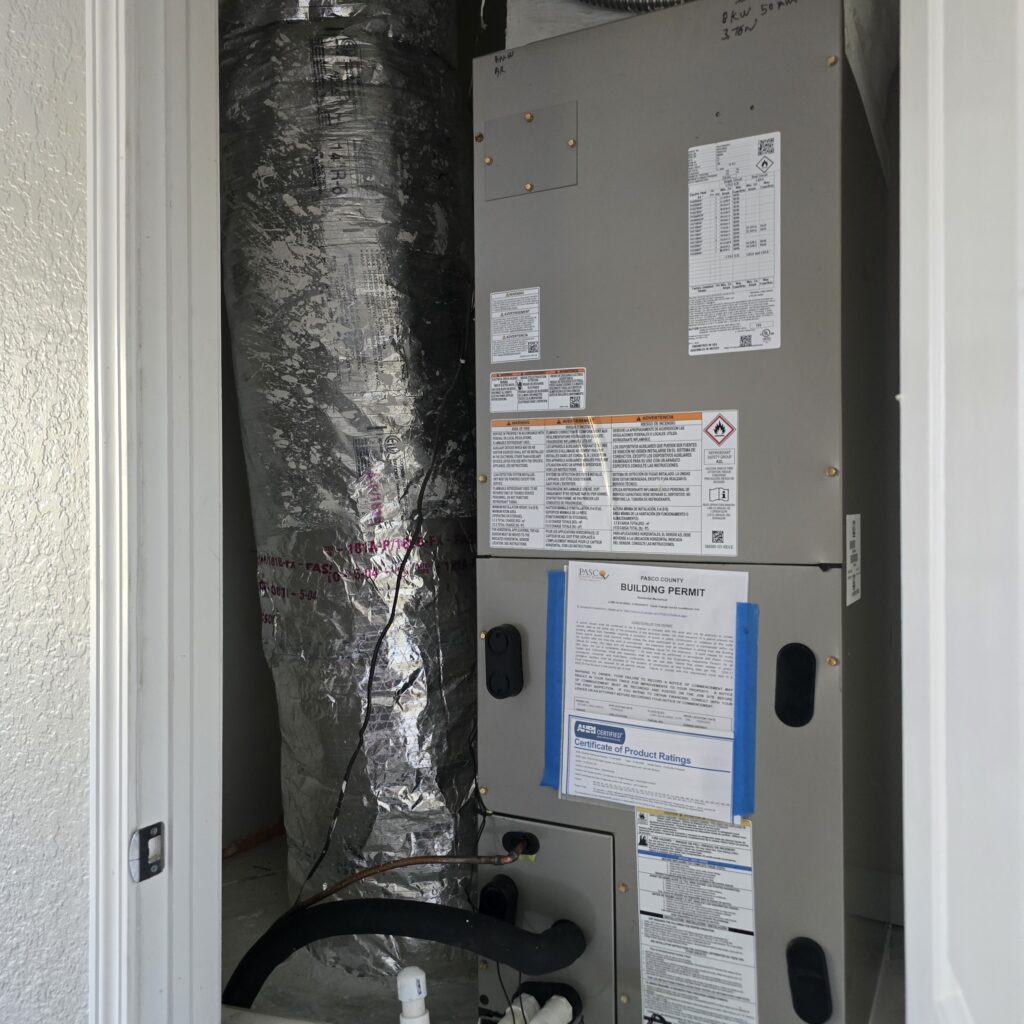
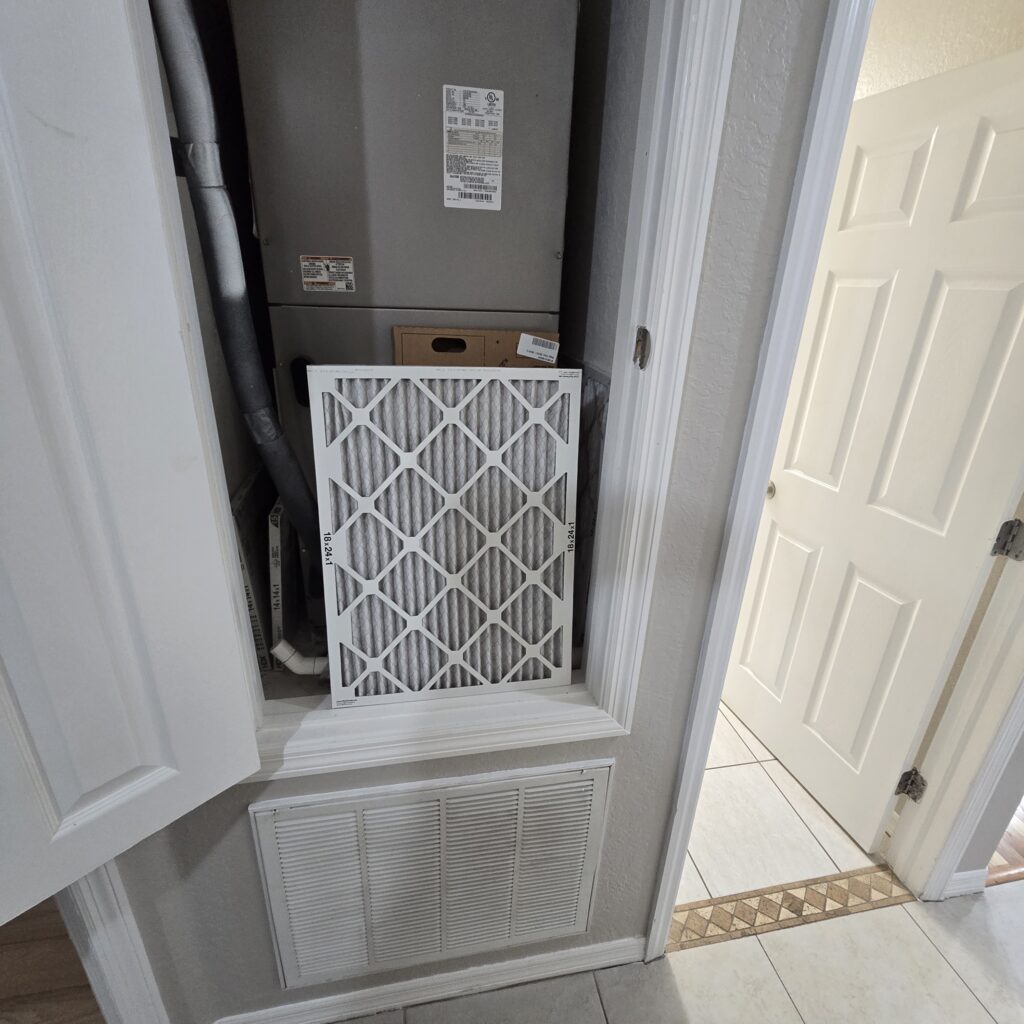
The air filter is the single most common reason a furnace works harder than it should, and it is the one item completely within a homeowner’s control. A standard one inch pleated filter needs replacement every one to three months in most homes, and closer to every thirty days in houses with pets, active remodeling, or occupants with allergies. Thicker media filters mounted in a dedicated cabinet last six to twelve months because they present far more surface area to the airflow. As a filter loads with dust, the pressure drop across it climbs steadily, and the blower moves progressively less air through the heat exchanger. That reduced airflow drives temperature rise upward, trips the high limit switch, and shortens the life of expensive components. A three dollar filter left in place for a year can cost hundreds in repairs.
Filter selection matters just as much as replacement frequency, and higher numbers are not automatically better. MERV ratings measure how effectively a filter captures small particles, and a MERV 13 filter does trap more allergens than a MERV 8. The catch is that finer filtration creates greater resistance, and a one inch MERV 13 filter installed in a system designed for a lower rating can starve the blower badly enough to cause the exact overheating problems you were trying to avoid. Getting both good filtration and healthy airflow requires increasing the filter surface area, usually by installing a four or five inch media cabinet sized correctly for the system. That upgrade costs a few hundred dollars and pays for itself in equipment protection and cleaner indoor air. It is one of the most practical improvements available to homes dealing with winter inversion air.
Blocked returns cause the same starvation as a dirty filter and are easier to overlook because nothing about them looks wrong. Furniture pushed against a return grille, an area rug covering a floor return, storage boxes stacked in front of a basement return, or closed interior doors in a house with only one central return all restrict the air the furnace needs to pull back. A bedroom with the door shut and no return path can build enough pressure to significantly reduce the supply air reaching it, leaving that room cold while the rest of the house heats normally. Closing supply registers to save money makes things worse rather than better, because the trapped air raises system static pressure and the furnace still burns the same amount of gas. Undercutting doors, adding transfer grilles, or installing additional return ducts solves the problem permanently. A technician evaluating airflow will check every one of these paths before touching the equipment.
Leaky Ducts Make a Furnace Work Harder Than It Should
Duct leakage wastes an enormous amount of the heat your furnace produces, and studies from the Department of Energy have long estimated typical losses in the range of twenty to thirty percent for systems with ducts in unconditioned space. Picture paying a third of your gas bill to warm a crawl space, an attic, or a garage that nobody occupies. Joints separate as sheet metal expands and contracts through thousands of heating cycles, cloth backed tape dries out and releases within a few years, and flex duct connections work loose at the collars. Rodents and remodeling contractors do their share of damage as well. None of it is visible from inside the living space, which is why so many homeowners chase comfort problems at the thermostat instead of in the ductwork. Sealing accessible joints with mastic and mechanically fastening every connection stops the loss for good.
Return side leakage causes a different set of problems and often goes entirely unnoticed. When a return duct running through a dusty crawl space or an attic pulls unconditioned air into the system, the furnace has to heat that outside air along with the air from your rooms. In a home with an attached garage, return leakage can draw in exhaust fumes, stored chemical vapors, and other contaminants that end up circulating through every room. Pressure imbalances created by leaky returns can also affect the draft on combustion appliances, which is a genuine safety concern in homes with a natural draft furnace or water heater. Air infiltrating from crawl spaces brings moisture and dust straight into the distribution system. Testing the ducts under pressure identifies exactly where the leaks are rather than leaving anyone to guess.
Insulation on ducts running through unconditioned areas deserves the same attention as sealing, since even a perfectly sealed metal duct radiates heat into a cold attic. Older installations often used insulation with an R value of four or less, and decades of settling, sagging, and rodent activity leave much of it doing very little. Current practice calls for a substantially higher R value in attics and crawl spaces, and the upgrade is straightforward on accessible runs. Duct cleaning is a separate service from sealing, but it belongs in the conversation for homes with visible dust buildup, evidence of rodents, or recent construction. Clean, sealed, insulated ducts deliver more heat per dollar of gas burned and reduce the run time the furnace needs. Suspect your ductwork is stealing heat? Click here for our air duct inspection service.
Thermostat Problems and Bad Sizing Make a Furnace Work Harder Than It Should
A thermostat mounted in the wrong location gives the furnace bad information, and the equipment obediently acts on it every cycle. Placement near a supply register, in direct sunlight from a south facing window, on an exterior wall, or above a heat producing appliance causes the sensor to read a temperature that does not represent the house. The result is a system that shuts off before the living space is comfortable or runs long past the point of need. Older mechanical thermostats can drift several degrees out of calibration as their internal components age, and even modern units fail eventually. Loose thermostat wiring produces intermittent behavior that mimics a dozen other problems and frustrates anyone trying to diagnose it. Verifying the thermostat reading against an accurate reference thermometer takes only a few minutes and rules out a surprising number of complaints.
Programming choices influence how hard the furnace works across an entire season. Deep setbacks of ten degrees or more force the system into long recovery cycles that can leave the house cold for hours on the coldest mornings, and homes with high thermal mass recover especially slowly. A setback of five to eight degrees during sleeping hours and unoccupied periods captures most of the available savings without punishing the equipment. Smart thermostats that learn recovery times start the system early enough to hit the setpoint at the scheduled hour rather than fighting from a large deficit. Systems with heat pumps require additional care, because aggressive setbacks trigger expensive auxiliary heat during recovery. Setting the schedule correctly costs nothing and lowers run time immediately. Ready for a thermostat that actually helps? Click here for our thermostat installation service.
Equipment sizing remains the underlying issue in a large number of homes, and it cannot be fixed with settings or maintenance. A furnace selected without a proper load calculation is usually oversized by a wide margin, which produces short cycles, uneven temperatures, and noisy operation. An undersized furnace runs almost continuously in January and still fails to reach the setpoint on design days, which is equally hard on the equipment. Homes that have added insulation, replaced windows, or sealed air leaks since the original installation need a fresh calculation, because their heating load may have dropped by thirty percent or more. Two stage and modulating furnaces handle sizing mismatches far better than single stage units, since they can run at reduced capacity during mild weather and deliver steady, even heat. Choosing capacity based on measured load rather than on the size of the old unit is the single best decision available during a replacement.
Why You Need Professional Furnace Service Before Winter Arrives
Fall is the right time to address a furnace that works harder than it should, while outdoor temperatures still allow flexibility and before schedules fill with emergency calls. Every issue described above becomes more expensive and more disruptive once the system is running around the clock in December. A thorough inspection now catches restricted airflow, combustion problems, duct losses, and worn components while they are still inexpensive to correct. It also verifies that the safety devices protecting your family, including the heat exchanger and the venting system, are functioning as designed. Vortex Air HVAC serves Orem, Provo, Lehi, American Fork, Pleasant Grove, Springville, and communities throughout Utah County with licensed technicians and 24/7 emergency availability. Getting ahead of the season costs far less than reacting to it.
A Fall Tune Up Stops Your Furnace From Working Harder Than It Should
A complete furnace tune up goes well beyond a visual check and a new filter, and the difference shows up in both the utility bill and the repair history. Our technicians clean the burners, inspect and clean the flame sensor, test the igniter, verify manifold gas pressure against the rating plate, and measure temperature rise to confirm it falls inside the manufacturer’s specified range. Static pressure readings on both the supply and return sides reveal airflow restrictions that no visual inspection would catch. Combustion analysis confirms the burners are operating cleanly and efficiently at our local elevation. Electrical connections get tightened, capacitors get tested, and the blower assembly gets cleaned and checked.
Heat exchanger inspection is the safety centerpiece of any professional service visit. Cracks develop over years of thermal stress, and the risk climbs sharply on systems that have been overheating from restricted airflow. A compromised heat exchanger can allow combustion gases, including carbon monoxide, to mix with the air circulating through your home. Our technicians inspect the exchanger visually and with instruments, and every home should also have working carbon monoxide alarms on each level as an independent layer of protection. Finding a problem in October gives you options that finding it in January does not.
Scheduling maintenance annually keeps small issues from compounding across seasons and preserves manufacturer warranty coverage, which most brands condition on documented professional service. Regular attention typically extends equipment life by several years and holds efficiency close to the original rating instead of letting it decline year after year. Customers on a maintenance plan also gain priority scheduling during the busiest stretches of winter. The visit takes about an hour for most residential systems. Ready to get on the schedule before the rush? Click here for our furnace maintenance service.
Fast Furnace Repair Keeps Your Furnace From Working Harder Than It Should
When a furnace already shows symptoms, prompt repair prevents one failing component from taking others with it. A blower motor fighting high static pressure draws excess current and runs hot, which shortens its life and stresses the capacitor and control board connected to it. Repeated high limit trips stress the heat exchanger metal directly. Addressing the root cause early keeps the repair confined to one part instead of a cascade of them. Our technicians diagnose the actual cause rather than replacing parts until the symptom disappears.
Utah winters do not wait for convenient timing, and a furnace that quits during a cold snap creates real risk to both the household and the plumbing. Vortex Air HVAC provides 24/7 emergency service throughout Utah County, and our trucks carry the components that fail most often so many repairs finish on the first visit. We give clear pricing before work begins, so you know what the repair costs and why it is needed. Our technicians explain what failed, what caused it, and what will keep it from happening again.
Some repairs point toward replacement rather than another round of parts, and we tell customers that plainly. A furnace past fifteen years old with a cracked heat exchanger, a failed control board, or repeated expensive failures rarely justifies continued investment. We present the numbers for repair against the numbers for a new high efficiency system and let you decide with full information. No pressure, no scare tactics, no upsell on equipment you do not need. Call (801) 400-2422 to talk with a technician about your options.
Why Choose Vortex Air HVAC When Your Furnace Is Working Harder Than It Should
Vortex Air HVAC is locally owned and operated from our shop at 776 W 165 S in Orem, and we work in these neighborhoods every day. Our licensed and certified technicians handle residential and commercial heating, cooling, and refrigeration across Utah County and the surrounding valleys. We know the housing stock here, from older homes in central Provo to new construction in Vineyard and Eagle Mountain, and we know how their systems tend to fail. Local experience shortens diagnosis time and produces better recommendations.
We approach every call with the understanding that you are trusting us inside your home. Technicians arrive on time, protect your floors, explain what they find in plain language, and clean up before they leave. We document our findings with measurements rather than opinions, so you can see the temperature rise, the static pressure, and the combustion numbers for yourself. Straight answers build the kind of relationships that keep customers calling us for years.
Energy efficient upgrades are a core part of what we do, from high efficiency furnaces and heat pumps to duct sealing, improved filtration, and smart thermostat installation. We size equipment with load calculations, commission every installation properly, and stand behind the work. Reach us at (801) 400-2422 or info@vortexairhvac.com to schedule an inspection, a tune up, or a repair. Let us make sure your furnace is ready before the first cold night arrives.